
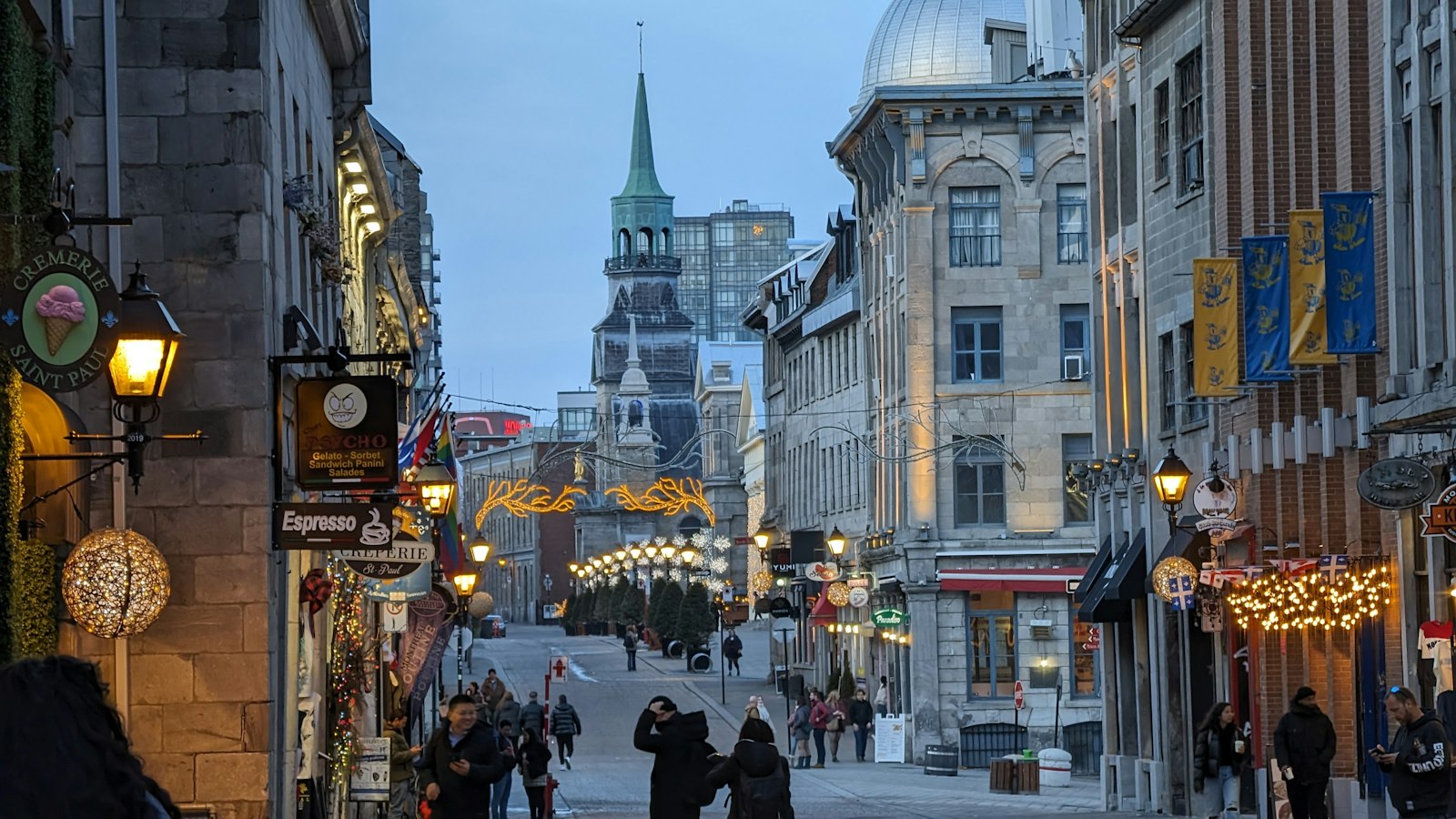
Montreal is one of the easiest city breaks in Canada, whether you drive in from Ontario, take the train along the Quebec City–Windsor corridor or fly into Montréal-Trudeau (YUL) from Vancouver, Calgary or Halifax. Where you book your hotel shapes the whole trip. Old Montreal gives you cobblestones and the waterfront, downtown puts you on the métro and close to the big shopping streets, and the Plateau feels like you live in the city. This guide compares the best neighbourhoods to stay in Montreal, explains how to get in from the airport and helps you pick the right base for your season and travel style.
Getting to Montreal and around
Most visitors arriving by air land at YUL. The STM’s 747 express bus links the airport with downtown, serving Lionel-Groulx métro station, several hotels along René-Lévesque Boulevard and a downtown terminus near Berri-UQAM. According to the STM, departures generally run every 10 to 20 minutes all day in both directions. Since January 2026, the downtown terminus has been at René-Lévesque Boulevard and Berri Street because of construction work, so check the STM site for the latest stop details before you land.
Once in the city, the métro and a good pair of walking shoes cover most of what visitors want to see. If you are driving from Toronto or Ottawa, factor in hotel parking, which is often charged separately in central areas. Choosing a hotel within a few minutes’ walk of a métro station is the single best way to save time.
Where to stay
Tourisme Montréal describes the city as a collection of neighbourhoods, each with its own personality. For a first visit, these are the areas that make the most sense for a hotel stay:
| Area | Best for | Vibe |
|---|---|---|
| Old Montréal and Old Port | Couples, first-timers, romantic weekends | Historic stone buildings, cobblestone streets, waterfront, boutique hotels |
| Downtown | Shoppers, business travellers, families | Busy and central, Sainte-Catherine Street, museums, direct métro access |
| Quartier des spectacles | Festival-goers, theatre and concert fans | Lively, performance halls and outdoor festival sites |
| Plateau-Mont-Royal and Mile End | Repeat visitors, foodies, creative types | Hip, artsy, residential, colourful staircases and cafés |
| The Village | LGBTQ+ travellers, nightlife | Terraces, cabarets, festive in summer |
| Griffintown and the Lachine Canal | Active travellers, longer stays | Modern condos, canal paths, restaurants, close to Atwater Market |
Old Montréal and Old Port: for history and charm
Old Montréal is the postcard version of the city. Tourisme Montréal highlights Notre-Dame Basilica, Marché Bonsecours and La Grande Roue de Montréal, the observation wheel at the Old Port. Many hotels here occupy restored heritage buildings, which makes the area a favourite for anniversaries and weekend escapes.
The trade-off is that Old Montréal can feel quiet once day-trippers leave, and some streets are steep and uneven, which matters in winter. It is still close to downtown on foot or by métro, so you rarely feel cut off.
Downtown: for convenience
Downtown sits between the river and Mount Royal. It is where you find Sainte-Catherine Street, the Montreal Museum of Fine Arts and the large hotel towers that suit families and business travellers. The underground pedestrian network, which Tourisme Montréal brands as The Ring, links many buildings and métro stations, a real advantage in January when the wind chill bites.
Downtown is also the most practical base if you plan day trips, since you are close to the airport bus route and major roads. The Golden Square Mile and the Quartier international are both part of the wider downtown area and offer quieter streets with upscale options.
Quartier des spectacles: for festivals
The Quartier des spectacles is Montreal’s entertainment district, with concert halls, theatres and public squares that host many of the city’s outdoor festivals. Staying here in summer means you can walk back to your room after a late show. Expect crowds and noise during major events, and book early if your dates line up with a big festival weekend. Check the official festival website for exact dates, as they change every year.
Plateau-Mont-Royal and Mile End: to live like a local
Tourisme Montréal calls the Plateau and Mile End hip, trendy and artsy, with a residential feel and lively evenings. This is where you go for bagels, Mont-Royal Avenue, Parc La Fontaine and the famous outdoor staircases. Hotels are fewer and smaller here, so many visitors choose boutique properties or short-term rentals. Check that any rental is legally registered in Quebec before you book.
The Plateau is ideal on a second or third visit, when you have already seen Old Montréal and want neighbourhood cafés over landmarks.
The Village: for nightlife
The Village is described by Tourisme Montréal as one of North America’s largest LGBTQ+ neighbourhoods. Its terraces, Cabaret Mado and summer street life make it one of the most festive areas of the city. It sits just east of downtown, so you are still close to the métro and the Quartier des spectacles.
Griffintown and the Lachine Canal: for active stays
The Quartiers du Canal, which include Griffintown, Little Burgundy and Saint-Henri, are known for food, drinks and outdoor activities. Atwater Market and the Lachine Canal paths are the main draws, and cyclists love the area. Newer apartment-style hotels make it a good fit for longer stays or travellers who want a kitchen.
Best time to visit
| Season | What to expect | Booking tip |
|---|---|---|
| Summer (June to August) | Festivals, terraces, warm evenings | Book central hotels well ahead, especially on festival weekends |
| Fall (September to October) | Cooler weather, fall colours on Mount Royal | Good balance of weather and availability |
| Winter (December to March) | Cold and snow, winter festivals, holiday markets | Pick a hotel near the métro or the underground network |
| Spring (April to May) | Thaw, sugar shack season nearby | Often a quieter time for city hotels |
Tips for Canadian travellers
- Language: French is the main language of Quebec. Most hotel and tourism staff speak English too, but a simple “bonjour” goes a long way.
- Taxes: Room rates in Quebec are usually shown before taxes and the provincial lodging tax, so compare the final price, not the headline rate.
- Parking: If you drive in, compare hotel parking with nearby public lots before you commit.
- Weekends: Grand Prix, festival and long weekends fill hotels quickly. Book early or stay slightly outside the core near a métro line.
- Accessibility: Not every métro station has an elevator. If you travel with a stroller or have reduced mobility, check station access before choosing your hotel.
Ready to compare prices? Check hotels and flights for your dates on Expedia.
Bottom line
For a first visit to Montreal, stay in Old Montréal for charm or downtown for convenience and easy métro access. Festival lovers should look at the Quartier des spectacles, while repeat visitors and food lovers will enjoy the Plateau and Mile End. The Village suits nightlife, and Griffintown works well for longer, active stays. Whatever you pick, a short walk to a métro station makes everything easier, especially in winter.
Frequently asked questions
What is the best area to stay in Montreal for a first visit?
Old Montréal is the best choice for charm, history and the waterfront, while downtown is the most convenient base, with direct métro access, Sainte-Catherine Street and major museums. Both are close to each other, so you can easily explore the other area on foot or by métro.
How do I get from Montréal-Trudeau airport to downtown?
The STM’s 747 express bus connects YUL with downtown, serving Lionel-Groulx métro station, hotels along René-Lévesque Boulevard and a terminus near Berri-UQAM. The STM says departures generally run every 10 to 20 minutes all day. Taxis and ride-hailing are also available at the airport.
Is the Plateau a good place to stay in Montreal?
Yes, especially for repeat visitors and food lovers. The Plateau and Mile End have a hip, residential feel, with cafés, bagel shops and parks. There are fewer large hotels, so you may book a boutique property or a registered short-term rental instead.
Where should I stay in Montreal in winter?
Downtown is the most practical winter base because many buildings and métro stations connect through the underground pedestrian network. Old Montréal is beautiful in the snow, but its cobblestone streets can be slippery. Choose a hotel a short walk from a métro station.
Related guides
- Where to Stay in Banff: Best Areas and Hotel Tips
- Best Winter Destinations in Canada for 2026-2027
- Where to Stay in Niagara Falls, Canada: Best Areas
- Hotel booking mistakes that cost you money
Entry rules, prices and schedules change often. Always check travel.gc.ca and official sources before you go. Sources: Every neighbourhood has its personality – Tourisme Montréal, 747 YUL Montréal-Trudeau Airport – STM.
Find hotels in Montreal
Search hotels and flights for your dates and book securely on Expedia.
Booking Hotel may earn a commission from Expedia at no extra cost to you. Learn more.
