
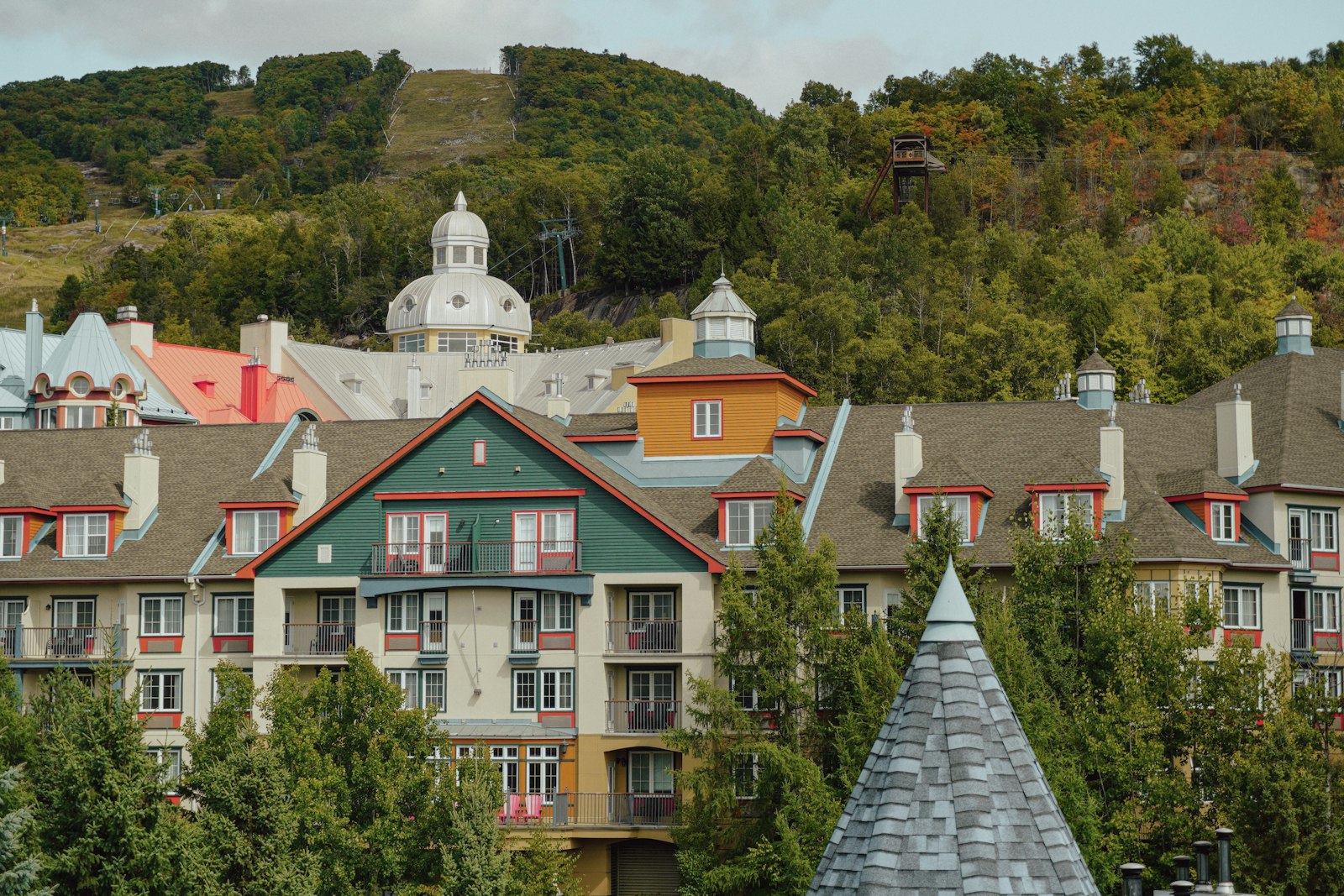
Mont-Tremblant is the Laurentians’ best-known four-season resort, and it is one of the easiest big getaways for Canadians: no passport, no currency exchange, no border lineup. The tricky part is choosing where to sleep. Tremblant is not one compact town but several distinct areas spread between the mountain, Lac Tremblant and the commercial downtown. Pick the wrong one and you will spend your trip waiting for shuttles; pick the right one and you can walk from your door to the gondola or the beach. This guide compares the pedestrian village, the quieter mountainside and golf domains, and the more budget-friendly options further out.
Getting to Mont-Tremblant from across Canada
According to Tremblant Resort, the drive takes about 90 minutes from Montreal (125 km), about 2 hours from Ottawa (165 km) and about 6.5 hours from Toronto (655 km). That makes it a classic weekend trip from Quebec and eastern Ontario, and a long but doable road trip from the GTA.
If you are flying in from Vancouver (YVR), Calgary (YYC), Toronto (YYZ) or elsewhere, the resort points visitors to Montreal-Trudeau International Airport (YUL), roughly 90 minutes away. From YUL you can book the resort’s direct coach shuttle or a private transfer, or rent a car. A car is not essential if you stay in or near the pedestrian village, but it is handy if you want to explore the national park, the old village or the restaurants downtown.
Where to stay
Since 2005, Saint-Jovite, the old village of Mont-Tremblant and the resort’s pedestrian village have been merged into one city, Ville de Mont-Tremblant. Locals and maps still use the old names, which helps when you are comparing listings. Here is how the main lodging areas stack up:
| Area | Best for | Vibe |
|---|---|---|
| Pedestrian Village | First-timers, couples, skiers without a car | Lively, car-free, steps from the gondola, bars and restaurants |
| Versant Soleil | Skiers who want slope access and space | Sunny side of the mountain, nature-focused, linked to the village by the Casino Express gondola |
| Domaine Nansen and Domaine de la Forêt | Large families and groups | Quiet mountainside townhouses and condos, some ski-in/ski-out |
| Golf side (Le Géant, La Diable) | Golfers, families who cook in | Peaceful, wooded, a short shuttle ride to the village |
| Old village (Village du Mont-Tremblant) | Lake lovers, cyclists, quieter stays | Small historic village about 5 km from the resort |
| Downtown (Centre-Ville, former Saint-Jovite) | Budget travellers, road trippers | Local commercial strip with shops and restaurants, about 12 km from the mountain |
The pedestrian village: the classic choice
If this is your first visit, start here. Tremblant’s own lodging guide counts 15 properties in the pedestrian village, from hotel rooms to studios, condos and suites that sleep up to 10. You are a few steps from activities, restaurants and bars, and close to the gondola, so you can leave the car parked for the whole stay. Most hotels have an outdoor pool in summer and hot tubs year-round, and the beaches and trails of Lac Tremblant are a few minutes’ walk away.
The trade-off is noise and demand. The village is the heart of the après-ski scene and of summer festivals, so light sleepers should ask for a room away from the main squares, and holiday weekends book up early.
Mountainside: Versant Soleil, Nansen and La Forêt
The mountainside domains are where Tremblant gets quieter without getting far. Units here generally come with full kitchens, and each area has a free shuttle to the village.
- Versant Soleil sits on the sunny side at the bottom of the slopes, with quick lift access. Smaller groups can look at condos near the casino, while newer two- to four-bedroom condos and chalets suit families. The Casino Express gondola or a free shuttle links it to the village.
- Domaine Nansen is the most private option, with large ski-in/ski-out townhouses of four to six bedrooms that can sleep up to 14, each with a winter hot tub.
- Domaine de la Forêt is the largest development, with one- to six-bedroom units, views over Lac Tremblant and the valley, and some ski-in/ski-out access.
For a multi-family ski week, splitting one big townhouse here often works better than booking several hotel rooms in the village.
Golf course side: Le Géant and La Diable
Near the resort’s two golf courses, these domains are calm and family-friendly. Domaine de la Diable has three-bedroom townhouses on the edge of the La Diable course, and Domaine Le Géant offers one- to three-bedroom condos and houses with kitchens and parking. Both are a few minutes from the village by car or shuttle. They are ideal in summer and fall, and a solid winter base if you do not mind shuttling to the lifts.
The lake: old village and the shores of Lac Tremblant
If your Tremblant trip is more about the water than the slopes, look beyond the resort core. The old village of Mont-Tremblant, about 5 km northwest of the resort, was once the centre of the area and feels slower and more residential. It is a good fit for cyclists, paddlers and anyone who wants a chalet or inn rather than a resort hotel. Remember that the pedestrian village itself is only a short walk from the Lac Tremblant beaches, so you do not need to stay out of town for a summer lake day.
Downtown: the budget pick
Downtown Mont-Tremblant, the former Saint-Jovite, is about 12 km south of the mountain. It is a real working town with grocery stores, cafés and restaurants, and lodging here tends to include motels, inns and chain hotels that can be easier on the wallet than slope-side condos. A free municipal bus loops between downtown and the resort, according to Tremblant, so you can still reach the lifts without paying for resort parking. It is the smart choice for road trippers, longer stays and anyone who cares more about value than après-ski.
When to go and what to book first
- Winter (ski season): the busiest and most in-demand period, especially the Christmas holidays, Ontario and Quebec March breaks and long weekends. Book lodging and lift tickets together, as early as you can.
- Summer: lake beaches, golf, hiking and festivals in the village. Families from Ontario and Quebec fill the resort in July and August.
- Fall: the colours in the Laurentians draw big crowds on weekends from late September into October. Midweek stays are calmer.
- Spring and late fall: the quiet shoulder seasons, when some services slow down but you can find more availability.
Practical tips for Canadian travellers
- Language: Mont-Tremblant is in Quebec, and French is the everyday language, though English is widely spoken at the resort. A simple “bonjour” goes a long way.
- Shuttles: the Tremblant Resort Association runs free shuttles between the lodging areas and the pedestrian village. Confirm the schedule for your domain before you book if you will not have a car.
- Kitchens: condos with full kitchens can stretch a budget considerably. Stock up at a grocery store downtown on the way in.
- Winter driving: according to the SAAQ, vehicles registered in Quebec, including rental passenger vehicles, must have winter tires from December 1 to March 15. If you drive in from Ontario, winter tires are strongly recommended for Laurentian roads.
- National park: Mont-Tremblant National Park is next door for hiking, paddling and cross-country skiing. Plan a car or tour to get there.
Ready to compare prices? Check hotels and flights for your dates on Expedia.
Bottom line
For a first visit, especially without a car, stay in the pedestrian village and walk everywhere. Families and groups who want space should look at mountainside condos in Versant Soleil, Domaine Nansen or Domaine de la Forêt, while golfers will love Le Géant and La Diable. For a slower lake-focused trip, try the old village, and if value matters most, base yourself downtown and ride the free bus to the mountain. Whichever area you choose, book early for ski holidays and fall colour weekends.
Frequently asked questions
What is the best area to stay in Mont-Tremblant?
For most first-time visitors, the pedestrian village at the foot of the mountain is the best area. You can walk to the gondola, restaurants, bars and Lac Tremblant beaches, so a car is optional. Families who want more space often prefer mountainside condos in Versant Soleil or Domaine de la Forêt.
How far is Mont-Tremblant from Montreal, Ottawa and Toronto?
According to Tremblant Resort, the drive is about 90 minutes from Montreal (125 km), about 2 hours from Ottawa (165 km) and about 6.5 hours from Toronto (655 km). Travellers flying in usually land at Montreal-Trudeau (YUL) and take a shuttle, a private transfer or a rental car.
Where can I find cheaper lodging in Mont-Tremblant?
Downtown Mont-Tremblant, the former Saint-Jovite, about 12 km south of the mountain, usually offers better value with motels, inns and chain hotels. A free municipal bus connects downtown with the resort. Booking a condo with a kitchen in a mountainside domain can also lower costs for groups.
Do I need a car if I stay in the pedestrian village?
No. Staying in the pedestrian village means the gondola, shops, restaurants and lake beaches are within walking distance, and free shuttles connect the other lodging areas to the village. A car is useful if you want to visit Mont-Tremblant National Park, the old village or downtown restaurants.
Related guides
- Where to Stay in Banff: Best Areas and Hotel Tips
- Best Winter Destinations in Canada for 2026-2027
- Where to Stay in Niagara Falls, Canada: Best Areas
- Hotel booking mistakes that cost you money
Entry rules, prices and schedules change often. Always check travel.gc.ca and official sources before you go. Sources: Getting to Tremblant – Tremblant Resort, Our different lodging sectors – Tremblant blog, Mont-Tremblant Travel Guide – Frommer’s, Winter preparation – Société de l’assurance automobile du Québec (SAAQ).
Find hotels in Mont-Tremblant
Search hotels and flights for your dates and book securely on Expedia.
Booking Hotel may earn a commission from Expedia at no extra cost to you. Learn more.
