
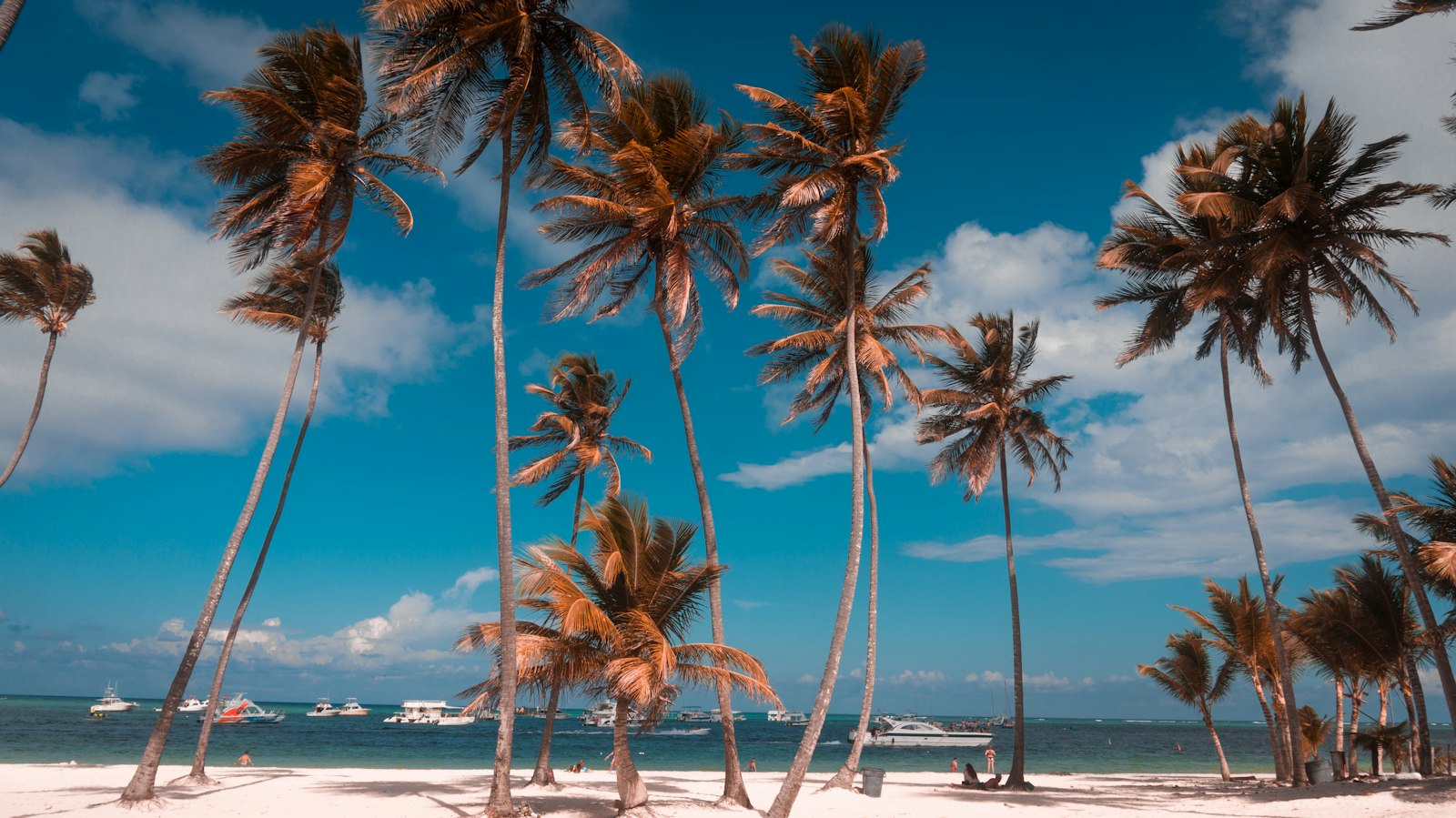
Punta Cana is a go-to winter escape for Canadians, with seasonal flights from big and small airports across the country and a long coastline of all-inclusive resorts. The name covers a whole stretch of the Dominican Republic’s eastern tip, from the busy beaches of Bávaro to the gated luxury of Cap Cana and the wild, wavy shores of Uvero Alto. Choosing the right area matters more than many travellers expect, because the beaches, the sea conditions and the airport transfer times are all different. This guide breaks down where to stay in Punta Cana, with entry basics for Canadians and booking tips.
Getting to Punta Cana from Canada
Punta Cana sits in La Altagracia province, at the easternmost point of the Dominican Republic. Punta Cana International Airport (PUJ) is just inland, on the highway between Higüey and La Romana. It was built by Grupo Puntacana and opened in 1984 as one of the first privately owned international airports in the hemisphere.
Canadian airlines and tour operators offer seasonal service to PUJ from many cities, including YUL, YYZ, YVR and YYC. Smaller markets are growing too: Air Transat has announced a new weekly Charlottetown–Punta Cana flight starting December 16, 2026, subject to approvals, and already flies to Punta Cana from London, Ontario. Check your airline for current schedules.
Entry basics for Canadians
According to the official Dominican Republic tourism board, Canadians do not need a visa for tourist visits. Passports normally need six months of validity, but a temporary measure from December 1, 2024 to December 31, 2026 lets Canadian tourists enter with a passport valid for the length of their stay. You must complete the free electronic entry and exit form (e-Ticket) before airline check-in, and you may be asked for a return ticket, an address in the country and proof of funds. Stays over 30 days carry an extra fee at departure. Rules can change, so check travel.gc.ca before you go.
Where to stay
Most resorts line the coast north and south of the cape. Here is how the main areas compare:
| Area | Best for | Vibe |
|---|---|---|
| Bávaro | First-timers, families, groups | Long sandy beach, calm water behind the reef, lots of resorts and activities |
| Cabeza de Toro | Snorkellers, couples, families with small kids | Calm water, fishing-village feel, boat trip departures |
| Arena Gorda | All-inclusive regulars, beach sports | Wide white sand, palm trees, big resort complexes |
| Cap Cana and Juanillo | Luxury stays, golf, special occasions | Upscale planned community, marina, quiet beaches |
| Punta Cana (south of the cape) | Short transfers, golf, eco-minded travellers | Calmer, close to the airport, resort and residential areas |
| Macao and Uvero Alto | Seclusion, surfers, adults seeking quiet | Remote, rougher surf, fewer outside restaurants |
Bávaro: the classic choice
Bávaro is the heart of the resort coast, stretching roughly from Cabeza de Toro up to Macao Beach. Its long beach has fine sand and clear water, and an offshore coral reef helps keep swimming calmer. Dive sites, zip-line tours and all-terrain vehicle excursions are all nearby. Bávaro is also where you find most of the shopping, restaurants and services outside the resorts, including the small El Cortecito area.
It is the best fit for first-timers and families who want plenty of choice and an easy beach day. The trade-off is that some stretches can feel busy, especially in peak winter weeks.
Cabeza de Toro: calm and low-key
Cabeza de Toro sits at the southern end of the Coconut Coast, beside a fishing village. Its calm, clear water is popular with snorkellers, and a wooden pier serves as a departure point for boat trips. It is a good middle ground for families with young children or couples who want a quieter beach that is still close to Bávaro.
Arena Gorda: big resorts, wide sand
North of Bávaro, Arena Gorda has a wide strip of white sand lined with palms and is home to several large resort complexes. Beach sports, diving and glass-bottom boat tours are common. It suits travellers who plan to stay mostly within their resort.
Cap Cana and Juanillo: for luxury
Cap Cana is an upscale planned community south of Punta Cana. Its signature beach, Juanillo, is about a 15-minute drive from the airport and is known for warm, clear water and white sand, with kayaks and sailboats to rent. Cap Cana suits honeymooners, golfers and travellers who want privacy and a polished resort experience. It is more spread out, so you may rely on taxis or shuttles to get around.
Punta Cana proper: close to the airport
The area right around the cape and south of it, including Cabo Engaño, is one of the least developed parts of the coast and the closest to PUJ. It is a good choice if you want the shortest possible transfer. The Puntacana Foundation runs a large ecological reserve here, a bonus for nature lovers.
Macao and Uvero Alto: for seclusion
Macao Beach sits between Arena Gorda and Uvero Alto and is known for its turquoise cove, horseback riding and lobster meals on the sand. Uvero Alto, farther north, is a semicircular beach popular for walks and horseback rides. It has no coral reef, so the water is rougher, which appeals to experienced surfers more than young swimmers. Resorts here are more isolated and farther from the airport, ideal if you want to switch off completely.
Which area fits your trip?
- First all-inclusive with kids: Bávaro or Cabeza de Toro, for calmer, reef-protected water.
- Honeymoon or milestone birthday: Cap Cana and Juanillo.
- Quick getaway with a short transfer: Punta Cana proper or Cap Cana, both close to PUJ.
- Total switch-off: Uvero Alto or Macao, as long as you are fine staying mostly at your resort.
Best time to visit
| Period | What to expect | Booking tip |
|---|---|---|
| December to April | Drier, peak Canadian season, holidays and March break | Book early for school breaks and long weekends |
| May to June | Warmer, fewer crowds | Often good value and availability |
| June to November | Atlantic hurricane season, more heat and humidity | Consider travel insurance and flexible bookings |
Tips for Canadian travellers
- Check the transfer time: Cap Cana and Punta Cana are close to PUJ, while Uvero Alto can take much longer.
- Read the beach, not just the resort: Families should favour reef-protected beaches like Bávaro and Cabeza de Toro.
- Day trips: Saona and Catalina islands are popular boat excursions from the area.
- Travel insurance: Buy out-of-country medical coverage before you leave Canada.
- Registration: Sign up with the Registration of Canadians Abroad service so the Government of Canada can reach you in an emergency.
Ready to compare prices? Check hotels and flights for your dates on Expedia.
Bottom line
For a first trip to Punta Cana, Bávaro is the safest bet, with calm, reef-protected water and plenty of choice. Pick Cabeza de Toro for quiet snorkelling, Arena Gorda for big all-inclusives, Cap Cana and Juanillo for luxury, Punta Cana proper for a short airport transfer and Uvero Alto or Macao for seclusion. Complete your e-Ticket before check-in and check travel.gc.ca before you go.
Frequently asked questions
What is the best area to stay in Punta Cana?
Bávaro is the best area for most travellers, especially first-timers and families. Its long beach is protected by an offshore reef, so the water is calmer, and it has the widest choice of resorts, restaurants and activities. Cap Cana is the top pick for luxury.
Do Canadians need a visa for Punta Cana?
No. Canadians do not need a visa for tourist visits to the Dominican Republic. You must complete the free e-Ticket entry and exit form before airline check-in. Passport rules include a temporary measure through December 31, 2026, so check travel.gc.ca before you go.
Which Punta Cana beach is best for families?
Bávaro and Cabeza de Toro are the best choices for families. Bávaro’s offshore reef keeps the water calmer, and Cabeza de Toro has calm, clear water that snorkellers love. Uvero Alto has no reef and rougher surf, which is less suitable for young swimmers.
Is Cap Cana close to Punta Cana airport?
Yes. Cap Cana is south of Punta Cana and one of the closest resort areas to PUJ. Its signature beach, Juanillo, is about a 15-minute drive from the airport, which makes it a convenient choice if you want a short transfer after your flight from Canada.
Related guides
- Where to Stay in Cancún: Hotel Zone, Downtown or Riviera Maya?
- Hotel booking mistakes that cost you money
Entry rules, prices and schedules change often. Always check travel.gc.ca and official sources before you go. Sources: Entry requirements – Go Dominican Republic, Punta Cana’s most beautiful beaches – French bee, Punta Cana – Wikipedia, Winter 2026-2027 news release – Air Transat.
Find hotels in Punta Cana
Search hotels and flights for your dates and book securely on Expedia.
Booking Hotel may earn a commission from Expedia at no extra cost to you. Learn more.
